The Spontaneity of Freedom Lecture Series
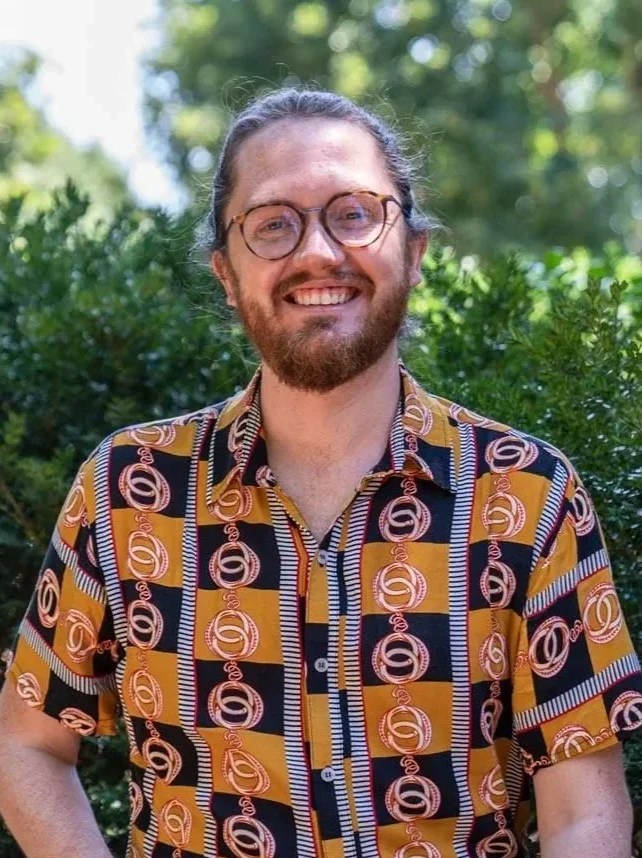
Zachary Irving (University of Virginia) Strange Freedom: Liberatory Alienation in Spontaneity (co-authored with Jordan Bridges)
POSTPONED – Date TBD
Should our ethical lives be guided by reasons or passions? Are we free when we are governed by reflective deliberation and choice? Or when we express our deep, but implicit, cares and values? Both sides of the reasons–passion debate assume that these exhaust our options. Spontaneity challenges this worldview, since it is guided by neither reasons nor passions. And spontaneity frees us for precisely that reason: not because it expresses our core cares and values or is governed by our reflective deliberation and choice, but rather because it frees us from both. Spontaneity allows us to step outside of our deep and deliberative selves, and think about the world from a perspective that is alien to our own. We argue for a tripartite view of human freedom, which involves balancing between our reflective, implicit, and spontaneous selves. Our argument for this tripartite view integrates the leading model of spontaneity in cognitive science and Virginia Woolf’s account of spontaneous freedom across her novels and essays. Our view explains the same core phenomenon as Gingerich’s model of spontaneous freedom: the freedom of the open road. Yet we disagree with him descriptively and normatively. Descriptively, spontaneity frees us not only from our plans but also from our passions. Normatively, spontaneity is self-alienating: its core role is to alienate us from our deliberative and deep selves.
Conferences
The Spontaneity of Freedom Summer Workshop 2026: Sex
In July 2026, SPONT hosted its second annual conference on “sex,” the first in a three-year conference series exploring “sex, drugs, and rock-and-roll.” Speakers and commentators included Avgi Saketopoulou (Private Practice / NYU Postdoctoral Program in Psychotherapy and Psychoanalysis), Andreja Novakovic (University of California, Berkeley), Nick Clanchy (University of Oxford), Ry Smith (Columbia University), Tim Dean (University of Illinois), Francey Russell (Barnard College and Columbia University), Elena Comay del Junco (University of Connecticut), Elizabeth Holt (University College London), Ellie Anderson (Pomona College), Ayesha Chakravarti (University College London), Simon Shogry (University of Oxford), Jeremey David Fix (University of Oxford), Kirstine La Cour (University of Oxford), and Ann Pellegrini (New York University).
The Spontaneity of Freedom Summer Workshop 2025: Spontaneity
In July 2025, SPONT hosted its first annual conference on the theme of “spontaneity” at University College London. Participants included Emily McTernan (University College London), Pablo Fernandez Velasco (University of Stirling), Karl Schafer (University of Texas), Tom Whyman (University of Liverpool), Ting Fung Ho (Duke University), Elena Holmgren (University of British Columbia), Brian O’Connor (University College Dublin), Eric Yang (Santa Clara University), Xiaochen Zhao (Independent Scholar), Amin Ebrahimi Afrouzi (UCLA), David Chandler (UCL), Ayesha Chakravarti (UCL), Isabel Herburger (Rutgers), Elizabeth Holt (UCL), Kirstine la Cour (UCL), Ethan Nowak (Stanford) and Charles Petersen (Stanford).
Previous Lectures

Ethan Nowak (Stanford University)
Facing a problem together
University College London, Friday, 12th June 2026, 16:00-18:00
My aim in this talk will be to describe a distinctive sort of diachronic social good and to draw out some consequences of recognizing it. In brief, I will argue that continuities in the space of affordances an artifact or environment presents to agents offer the possibility of communing with a distant person by coming to know what it’s like to face a problem they did or will face. I will say why I think the kind of togetherness I describe is valuable, and I will show how it might be used to ground claims about preservation.
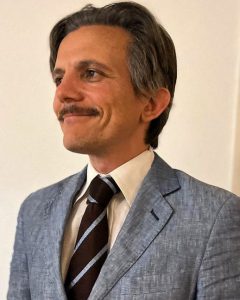
Lorenzo Zucca (King’s College London) Imagining the Law: Creative Imagination as a Jurisprudential and Human Capacity
University College London, Friday, 29 May 2026, 16.00-18.00
What is creative imagination, and why does it matter for law? Not as a supplement to legal reasoning but as its very foundation: the capacity without which law cannot be understood, sustained, or renewed.
This presentation argues that creative imagination is a cultivable form-of-life capacity, irreducible to computation or rational procedure, through which human communities produce the legal and constitutional worlds they inhabit. Constitutional orders are not discovered or deduced. They are imagined into existence, sustained by collective imaginative investment, and capable of being refashioned when the conditions that generated them no longer hold. To understand law is therefore to understand the imaginative acts through which it was made. This is the core insight of Giambattista Vico’s verum factum principle: we know the human world with certainty because we made it; and because we made it, we can remake it.
Vico also shows why that capacity cannot be taken for granted. As communities develop, reason progressively displaces imagination. Inherited legal and constitutional achievements come to be treated as natural givens rather than historical accomplishments. The capacity to reimagine them atrophies — until the moment Vico calls the ricorso: the recovery of creative power at the point of rational exhaustion, the return to origins not to repeat the past but to begin again on deeper foundations.
The presentation will argue that creative imagination is jurisprudence’s most urgent and most neglected resource; and that artificial intelligence, which can elaborate and recombine but cannot renew, makes that argument impossible to defer.

Bernardo Zacka (Massachusetts Institute of Technology) Before a Word Is Spoken: The Institutional Atmosphere of the Welfare State
University College London, Monday, 25 May 2026, 16.00-18.00
For most of those who interact with it, the state is a place—somewhere we go to do something or to have something done to us. What difference does it make if that space is bright or grim, bland or distinctive, hospitable or forbidding? This talk presents a book that reconstructs the architectural history of public employment offices (Jobcenters) in the UK, the US, and Denmark from the early twentieth century to the present. The book takes as its object something political theory ordinarily does not look at—the carpets, furniture, lighting, and layouts of administrative offices—and shows that architecture is a political force in its own right. At its best, it can give the fraught relationship between citizens and the welfare state a second chance, making it possible for parties often cast as adversaries to meet on a different footing. At its worst, it can corrode that relationship further, impeding the institution’s ability to deliver on its democratically-sanctioned mandate. Methodologically, the talk models a form of political theory that proceeds through thick description and comparison, so that our sense of what we should demand of an interface between state and society emerges from sustained attention to how such interfaces actually function and are experienced.

Paulina Tambakaki (University of Westminster)
Democracy, Repair and Trajectories of Affect
University College London, Friday, 15 May 2026, 16:00-18:00
Interest in the role of affect in politics has increased in today’s uncertain world. Emotions, feelings, and passions are widely drawn into discussions to explain a range of phenomena, from democratic allegiance and commitment to ideals of equality to support for political leaders threatening to dismantle constitutional democracies (Cossarini and Vallespín 2019; Leeb 2024; Tambakaki 2025). Particular affects, such as anger, fear, and envy are studied to understand the spread of far-right movements, and affective dispositions, such as hope, are examined to explain varieties of environmental activism (Capelos, Salmera and Krisciunaite 2022; Thaler 2024). The message is clear. Affects do something for politics: they shape identities, motivate action, and nourish democratic attachments. If this is correct, then we need to begin to untangle the type of bonds that emerge out of affective relations – the ‘identifications’, ‘attachments’ and ‘investments’ which drive people in and out of politics. In times of closure, I will argue in this paper, it is significant that we understand the contours of affects, the relations, and experiences they produce, and the space these open (or close) for counter-politics.

George Pavlakos (University of Glasgow) – Democratic Law in the State of Nature: A Kantian Framework
Univeristy College London, Friday, 6 March 2026, 16.00-18.00
I argue that democratic law exists even within the state of nature, challenging the common view that pre-political claim-rights must precede democratic law. The traditional perspective regards democratic law as merely implementing individual rights, thereby generating conflicts between personal claims and the collective democratic will. In contrast, this paper suggests that rights can exist as juridical claims only when embedded within democratic law, thus preventing such irreconcilable conflicts.
This, however, raises the concern that rights might become contingent upon consent or convention. The paper addresses this by introducing the concept of pre-institutional democratic law – a form of law grounded in the morality of external freedom rather than in formal legal institutions. Drawing on Kant’s Doctrine of Right, the argument develops a version of radical non-positivism, which maintains that juridical rights can be autonomous from legal institutions while still rooted in external freedom. Ultimately, the conclusion dissolves the notion of a purely pre-political state of nature, replacing it with a pre-institutional condition in which democratic norms exist independently of established legal institutions.
Along these lines, the paper presents itself as contributing to legal theory, democratic theory, and the further development of Kant’s legal and political philosophy.

Federica Gregoratto (Universität Luzern) Unlove and Its Reasons
University College London, Friday, 13 February 2026, 16.00-18.00
In the Western tradition, philosophers have discussed at great length the question What is love? Not only many different accounts of the nature of love, including romantic or erotic love, have been provided and debated. Also the question of the reasons of love – whether we can rationally grasp why we fall in love, and decide to stay in and cultivate relationships, or whether love can be in itself a source of reasons – has been amply discussed. Very little, however, has been said so far on the nature and the rationality of the end of love. If some work has been done in recent years on the phenomenology and the existential experience of romantic break-ups and divorces, it seems arduous, if not impossible, to come up with explanations for them. We might understand what happens to us when we experience the event, or go through processes of separation from the persons we love or have loved (e.g. a reconfiguration or transformation of our personal identities), but why does this happen?
In the talk, I delineate four possible hypotheses. The first appeals to morally apt rage, namely rage prompted by wrongdoing, as a potential cause of unlove. Serious wrongdoing, such as violence or abuse, may not only destroy love but also undermine the target’s capacity to establish themselves (again) as a proper subject of love. The second hypothesis flashes out a double failure of desire. If the dynamic of desire unfolds through oscillations between absence and presence, lack and fulfilment, closeness and distance, then unlove emerges when this dynamic is blocked, when one pole, namely, comes to dominate and effectively cancel the other. The third hypothesis foregrounds social, political, and economic structures. Patriarchal gender norms, neoliberal imperatives of self-optimization, the so-called “loneliness economy,” and forms of forced migration driven by economic or climate anxiety, among others, constitute objective forces that can pull lovers apart.The fourth and final hypothesis understands the end of love as a choice: the choice not to commit to the practice of love. On this view, the end of love reflects both an individual, private failure and a political, collective failure of commitment.

Inaugural Lecture: Berislav Marušić (University of Edinburgh) – The Ethicist and the Ontologist: On Self-Prediction in Practical Reasoning
University College London, Friday 21 March 2025, 16:00-18:00
Sometimes there is something problematic about self-prediction in practical reasoning. For example, the smoker who reasons that, since they are likely to smoke in the future, they should not take steps to quit as they are likely a wasted effort, is making a mistake. But what sort of mistake is it? The Ethicist holds that the mistake is fundamentally ethical: it’s an objectionable opportunism that excuses the satisfaction of a questionable preference. Thus, the smoker who refuses to quit on the grounds that he is likely to smoke again is finding an excuse for his bad habit. The Ontologist holds that the mistake is fundamentally ontological: it’s a mistake about the nature of freedom. Thus, the smoker who refuses to quit on the grounds that he is likely to smoke again treats his smoking as something that is not up to him but as a mere outcome, like the drawing of a lottery.
In this paper, I examine the depth of the disagreement between the Ethicist and the Ontologist. I argue that, despite various arguments against the opposing position, they are not fundamentally inconsistent. My main thesis is that mistakes about freedom are mistakes of freedom: An ontological mistake about our freedom is an ethically mistaken instance of choice. This is why, despite differences in emphasis, the Ethicist and the Ontologist can be reconciled.
Work in Progress Talks
12 June 2026 – Luka Chilvers
12 June 2026 – Sofia Weiss
29 May 2026 – Maja Longfors
15 May 2026 – David Chandler
8 May 2026 – Nia Large
8 May 2026 – Emmanuel Campion-Dye
 The Spontaneity of Freedom